
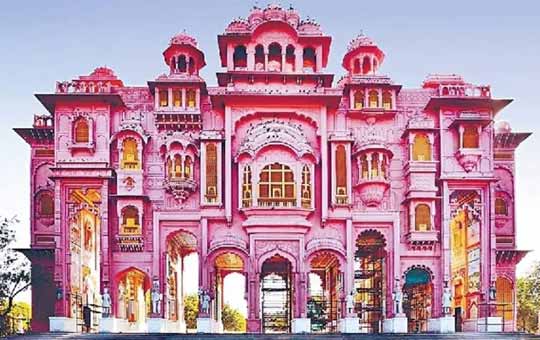
Rajasthan, the “Land of Kings,” is a place where history feels alive. Rising from deserts, hills, and lakes, its palaces and forts are not just impressive buildings—they are storytellers. Each stone corridor, carved balcony, and towering gate whispers tales of courage, romance, rivalry, and royal pride. To understand Rajasthan is to step into these spaces and listen to the stories they hold.
One of the most iconic forts is Amber Fort near Jaipur. Built in the late 16th century by Raja Man Singh, Amber Fort blends Rajput strength with Mughal elegance. From the outside, it appears formidable, with thick walls and steep ramps designed to stop invaders. Inside, however, lies a world of beauty: mirrored halls, painted ceilings, and peaceful courtyards. The famous Sheesh Mahal (Mirror Palace) was designed so that a single lamp could light up the entire room through thousands of tiny mirrors. Legend says the queens admired the star-like reflections, a reminder that even within stone walls, art and imagination flourished.
In the heart of Jodhpur stands the mighty Mehrangarh Fort, perched high on a rocky hill. Its massive walls have seen countless battles and victories. Rao Jodha, the founder of Jodhpur, built the fort in the 15th century, and it remains one of the best-preserved forts in India. The gates still bear marks of cannonballs, and inside the museum are royal palanquins, weapons, and costumes. One chilling yet important story associated with Mehrangarh is that of sati, a now-banned practice, where royal women sacrificed themselves after a king’s death. Handprints on the walls stand as silent reminders of traditions that once shaped society.
Further west, rising from the golden sands, is Jaisalmer Fort, also known as the Golden Fort. Unlike most forts, this one is a “living fort,” with families still residing inside its walls. Built in 1156 by Rawal Jaisal, the fort glows honey-gold at sunset, blending into the desert landscape. Jaisalmer’s wealth once came from controlling trade routes, and the fort’s grand havelis reflect the prosperity of merchant families. These havelis are decorated with delicate carvings that show everyday life, gods, animals, and nature, proving that art thrived even in harsh desert conditions.
Rajasthan’s palaces tell softer, more romantic stories. The City Palace in Udaipur, overlooking Lake Pichola, is a symbol of grace and beauty. Built by the Sisodia dynasty, it reflects their pride in resisting Mughal rule while still adopting refined architectural styles. Balconies, courtyards, and terraces open to stunning lake views, and legends of brave queens and loyal kings are woven into its history. Nearby, the Lake Palace, seemingly floating on water, was once a royal retreat. It represents luxury and peace, a contrast to the battle-hardened forts.
In Jaipur, the City Palace and Hawa Mahal reveal another side of royal life. Hawa Mahal, or the Palace of Winds, with its many small windows, allowed royal women to observe city life without being seen. This reflects the customs of the time and shows how architecture adapted to social traditions.
Together, Rajasthan’s palaces and forts are more than tourist attractions. They are chapters of a grand story—of kings who defended their land, queens who shaped culture, artists who created beauty, and people who lived, loved, and fought within these walls. Visiting them is like walking through history, where every step echoes with the spirit of royal Rajasthan.