
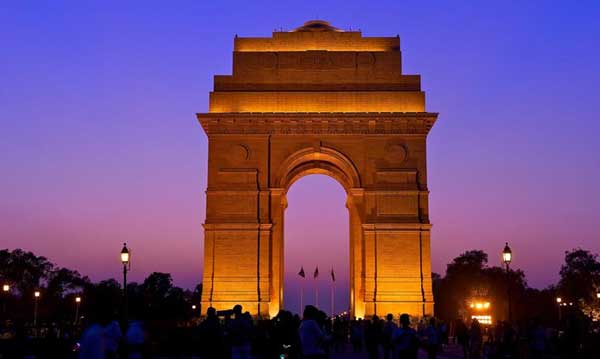
India Gate is one of the most prominent and respected monuments in India. Located in the heart of New Delhi, it stands as a symbol of bravery, sacrifice, and national pride. Every year, millions of visitors—tourists, students, historians, and local residents—visit India Gate to learn about India’s history and to pay tribute to the soldiers who laid down their lives for the country. More than just a tourist attraction, India Gate represents the spirit of patriotism and unity.
Historical Background
India Gate was designed by the renowned British architect Sir Edwin Lutyens and was completed in the year 1931. During the British period, it was known as the All India War Memorial. The monument was built to honor the Indian soldiers who fought and died for the British Indian Army during World War I (1914–1918) and the Third Anglo-Afghan War. It is believed that over 70,000 Indian soldiers lost their lives in these wars.
The names of more than 13,000 soldiers are engraved on the surface of the monument. These inscriptions serve as a permanent reminder of their courage and sacrifice. After India gained independence in 1947, India Gate became a national monument dedicated to Indian soldiers and their contributions to the nation.
Architectural Significance
India Gate is an excellent example of colonial-era architecture blended with classical design. The monument is inspired by the Arc de Triomphe in Paris and reflects a similar grand and symmetrical structure. Built using sandstone and granite, India Gate stands approximately 42 meters tall. Its massive arch, wide base, and elegant proportions give it a majestic appearance.
At the top of the monument is a shallow dome, also known as a bowl, which was once intended to hold an eternal flame. The monument’s design is simple yet powerful, allowing it to convey a sense of strength and dignity. At night, India Gate is beautifully illuminated with golden lights, making it a striking sight against the dark sky.
Amar Jawan Jyoti
One of the most important features of India Gate is the Amar Jawan Jyoti, meaning the Flame of the Immortal Soldier. This eternal flame was installed in 1972 after the Indo-Pak War of 1971 to honor the soldiers who sacrificed their lives for India. Beneath the arch of India Gate, a black marble platform holds a rifle topped with a soldier’s helmet, symbolizing the fallen warrior.
The flame burns continuously and is guarded by soldiers of the Indian Armed Forces. Visitors are expected to maintain silence and show respect in this area. The Amar Jawan Jyoti serves as a powerful reminder of the dedication and bravery of Indian soldiers and strengthens the emotional connection between the monument and the people of the nation.
Location and Surroundings
India Gate is located on Rajpath, now officially known as Kartavya Path, a ceremonial boulevard in New Delhi. This grand avenue stretches from Rashtrapati Bhavan to India Gate and is lined with lawns, fountains, and government buildings. The area around India Gate is carefully maintained and provides a pleasant environment for visitors.
The surrounding green lawns make India Gate a popular place for recreation. Families often visit for picnics, children play on the grass, and people enjoy morning and evening walks. The calm atmosphere during early mornings contrasts with the lively scene in the evenings when food vendors and ice-cream stalls attract large crowds.
National Importance
India Gate plays an important role during national events and celebrations. On Republic Day, the Republic Day Parade passes through Kartavya Path, with India Gate serving as a key backdrop. The entire area becomes the center of national pride, showcasing India’s military strength, cultural diversity, and achievements.
The monument is also visited by national leaders and foreign dignitaries, especially during official ceremonies. Wreath-laying ceremonies are often held at India Gate to honor fallen soldiers, further highlighting its importance as a national memorial.
Tourist Experience
India Gate is one of the most visited tourist attractions in Delhi. There is no entry fee, making it accessible to people from all backgrounds. The monument is well-connected by road and public transport. The nearest metro stations are Central Secretariat and Khan Market, from where visitors can reach the monument easily.
Tourists often combine a visit to India Gate with nearby attractions such as Rashtrapati Bhavan, National Museum, and Parliament House. Photography enthusiasts find India Gate particularly appealing, especially during sunset and at night when the lighting enhances its beauty.
Best Time to Visit
The best time to visit India Gate is during the cooler months from October to March, when the weather is pleasant. Early mornings and evenings are ideal, as the temperature is comfortable and the surroundings are peaceful. Summers in Delhi can be extremely hot, making daytime visits less enjoyable.
During national holidays such as Republic Day and Independence Day, security is heightened, and access may be restricted. Visitors are advised to follow rules and guidelines for safety and cleanliness.
Cultural and Social Significance
Beyond its historical and architectural value, India Gate holds deep cultural and emotional significance for Indians. It is a place where people gather not only for leisure but also to reflect on the sacrifices made by soldiers for the nation’s freedom and security. School trips, patriotic events, and public gatherings often take place here, helping younger generations understand the importance of national service and unity.
India Gate has also become a symbol of Delhi’s identity. It is often featured in films, books, and postcards, representing the city’s rich heritage and national importance.