
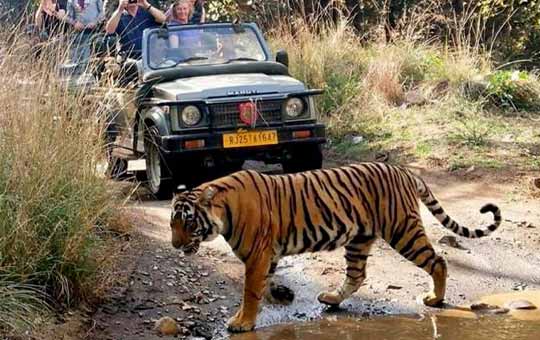
Ranthambore, located in Rajasthan’s Sawai Madhopur district, is best known for its national park, rich biodiversity, and grand historical monuments that rise unexpectedly from dense forests. Though the region is most famous for its tigers, Ranthambore offers far more—ancient ruins, serene lakes, vibrant birdlife, and a sense of wilderness that feels both raw and majestic. Together, these elements make it one of India’s most compelling travel destinations.
1. Ranthambore National Park
The primary attraction, Ranthambore National Park, spans more than 1,300 square kilometers when combined with its surrounding sanctuaries. It is one of India’s most important tiger reserves and renowned for offering unusually high chances of spotting Bengal tigers in the wild. The park’s terrain is a fascinating mix of steep cliffs, rocky plateaus, dry deciduous forests, and open grasslands, with ancient structures scattered throughout. Safaris conducted in open jeeps or canters take visitors deep into the park’s various zones, each offering unique landscapes and wildlife density.
2. Tiger Sightings and Wildlife
Ranthambore’s tigers are famously photogenic and often found lounging near lakes, patrolling trails, or resting against the backdrop of crumbled stone structures. Apart from tigers, the park is home to leopards, sloth bears, hyenas, jackals, sambar deer, chital, nilgai, wild boar, and the endangered caracal on rare occasions. Crocodiles basking along lake shores and langurs perched on fort walls add charm to the wilderness experience.
3. Ranthambore Fort
A UNESCO World Heritage Site under the Hill Forts of Rajasthan, Ranthambore Fort towers above the forests and offers panoramic views of the national park below. Built in the 10th century and once ruled by the Chauhan dynasty, the fort has witnessed numerous battles and sieges. Exploring the fort means wandering through massive gateways, crumbling palaces, old courtyards, and ancient reservoirs. Wildlife spotting from the fort is not uncommon—peacocks, langurs, and even occasional big-cat sightings in the surrounding terrain contribute to its allure.
4. Trinetra Ganesh Temple
Located inside Ranthambore Fort, the Trinetra Ganesh Temple is one of Rajasthan’s most revered shrines. Dedicated to Lord Ganesh, it is believed to be one of the oldest Ganesha temples in the country. Pilgrims climb through the forested pathways and stone steps of the fort to reach the temple, especially during festivals and Wednesdays, which are considered auspicious for Ganesh worship. The temple’s spiritual ambiance and sweeping views make it both a cultural and scenic attraction.
5. Padam Talao and the Iconic Jogi Mahal
Padam Talao is the largest lake in the park and one of its most picturesque spots. During the flowering season, the lake is dotted with blooming water lilies—hence the name “Padam,” meaning lotus. On the lake’s edge stands the historic Jogi Mahal, once used as a hunting lodge by Jaipur royalty. Although not open to the public, the building remains a favorite photography landmark. The giant banyan tree near Jogi Mahal is among the largest in India and itself an attraction.
6. Surwal Lake
Just outside the park, Surwal Lake is a tranquil haven for bird watchers, especially during winter when migratory birds arrive. Flamingos, painted storks, spoonbills, and various species of ducks gather at the lake, making it a peaceful alternative to the tiger-centric zones inside the reserve.
7. Raj Bagh Ruins
Scattered near Raj Bagh Talao are mysterious stone pavilions, arches, and palace remains that give the landscape a dreamlike quality. Tigers are frequently photographed around these ruins, making them one of the most iconic spots in Ranthambore.
Whether you come for wildlife, history, or natural beauty, Ranthambore offers an unforgettable blend of all three.